 Artificially generated image
 Guide to Cruises for Single Seniors in the UK
Choosing a cruise as a single senior in the UK is not simply about finding a ship with a nice deck and a decent buffet. It is about comfort, company, value, safety, and the freedom to travel without feeling overlooked in a market that often prices holidays for pairs. For many older travellers, cruising offers a practical mix of structure and spontaneity, with transport, dining, entertainment, and accommodation wrapped into one manageable plan. This guide shows how to compare options, avoid costly surprises, and sail with confidence.
Article Outline
- Why cruises often suit single seniors, especially those travelling from the UK.
- How to compare ships, cruise lines, departure ports, and itineraries.
- What solo travellers need to know about fares, supplements, cabins, and hidden extras.
- How onboard life works in practice, including social opportunities, safety, health, and accessibility.
- How to book well, prepare properly, and approach a first cruise with realistic confidence.
Why Cruises Appeal to Single Seniors in the UK
For many single seniors, cruising solves several travel problems at once. Instead of arranging trains, airport transfers, hotel check-ins, restaurant bookings, and day trips separately, a cruise bundles much of the journey into one booking. That simplicity matters. Travel can become tiring when every stage requires another queue, another suitcase lift, and another timetable. A cruise reduces those moving parts. Once you are on board, your cabin stays with you while the scenery changes, which is one reason cruising feels especially manageable for older adults who still want variety without unnecessary strain.
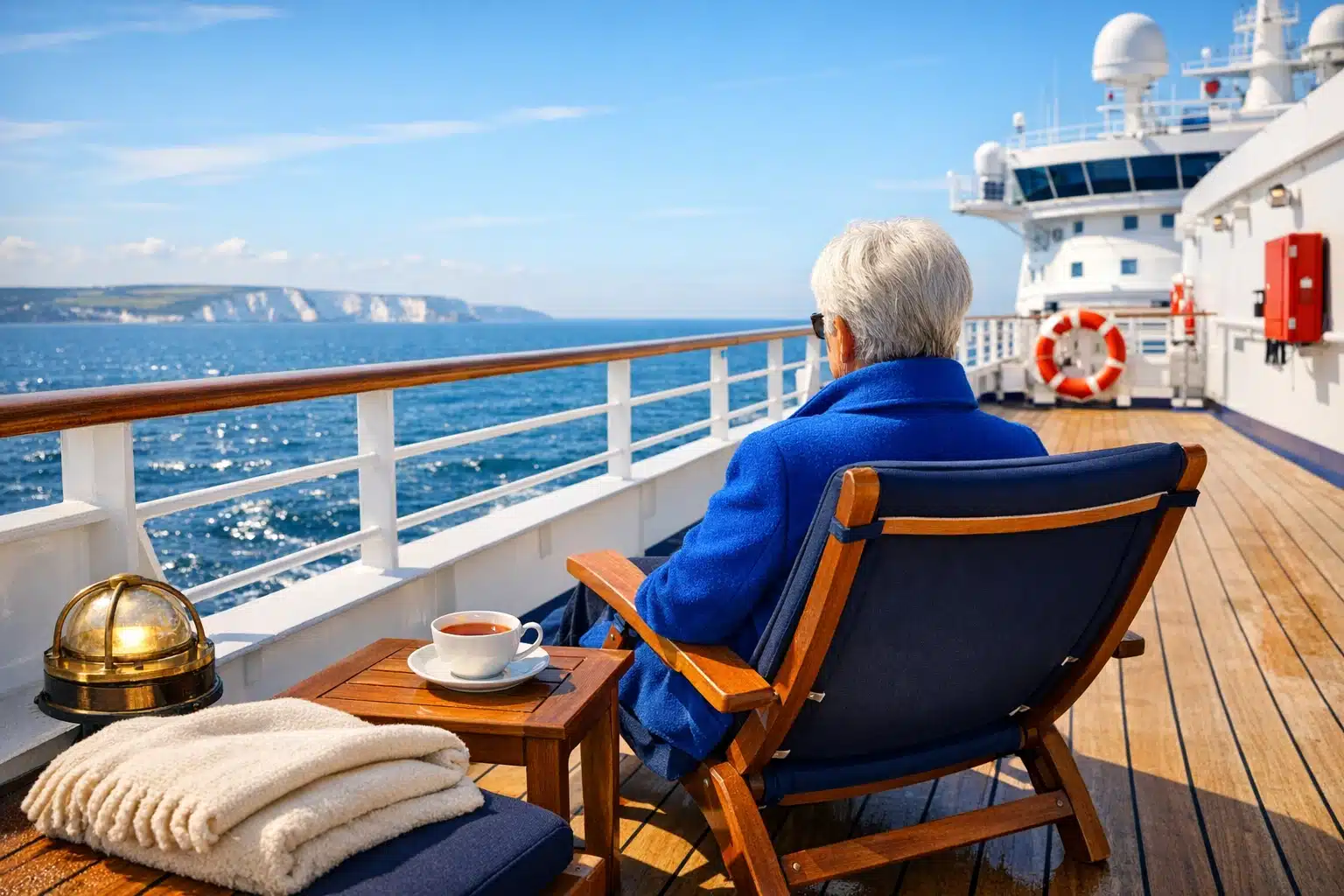
The UK market also makes cruising unusually accessible. Departures from Southampton are particularly well known, while other ports such as Liverpool, Dover, Newcastle, and Portsmouth may offer selected sailings. A no-fly itinerary can be very appealing for someone who would rather skip airport security, baggage restrictions, and the long walks often required in large terminals. There is a special ease in standing on deck with a cup of tea as the coastline slips away, knowing the holiday has started before you have even thought about passports at a foreign gate.
Single seniors often appreciate that cruises allow independence without isolation. You can spend a quiet morning reading by a window, join a lecture in the afternoon, chat with table companions at dinner, or retreat to your cabin early without explanation. Hotels can feel anonymous when you travel alone, while escorted tours may feel over-structured. Cruises sit somewhere in the middle. The environment is social, but participation is optional.
There are practical reasons behind the appeal as well:
- Meals are usually easy to access without extra planning.
- Entertainment is close by, which reduces evening transport concerns.
- Staff are used to helping older guests with questions and routine needs.
- Daily schedules make it simpler to pace energy and decide what matters most.
That said, cruising is not automatically perfect for every solo traveller. The biggest issue is often price, because many cabins are designed and priced for two people. Some ships are lively and modern, others are quieter and more traditional, and not every atmosphere suits every personality. Yet for a single senior in the UK who wants comfort, structure, and the chance to see several places in one trip, cruising remains one of the more practical and enjoyable holiday formats available.
How to Choose the Right Ship, Cruise Line, and Itinerary
The most important cruise choice is not always the destination. Very often, it is the overall style of the ship and the culture of the cruise line. Two itineraries may visit similar ports, yet the onboard experience can feel entirely different. A larger ship might offer multiple restaurants, theatres, classes, and lounges, but it can also involve longer walks, busier public spaces, and a younger age mix. A smaller ship may provide a calmer atmosphere, easier navigation, and more personal service, though with fewer entertainment options and sometimes fewer cabin categories. Single seniors usually benefit from asking a simple question first: do I want stimulation, simplicity, or a balanced blend of both?
For UK travellers, departure point matters nearly as much as ship size. Southampton remains a strong option for no-fly cruises to the Norwegian fjords, the British Isles, Northern Europe, the Canary Islands, and occasionally longer voyages. No-fly routes reduce airport stress and can make embarkation feel more straightforward. Fly-cruises open up the Mediterranean, the Caribbean, and more distant regions, but they add more steps, more timing pressure, and sometimes more luggage complexity. For a first solo cruise, many seniors prefer a seven to twelve night sailing from a UK port because it provides enough time to settle in without feeling overwhelming.
Cruise line personality deserves close attention. Some brands are adult-focused and quieter, while others attract mixed generations and a busier schedule. As editorial examples, Ambassador and Fred. Olsen are often considered by UK-based older travellers who like traditional cruising and regional departures. Cunard may appeal to those who enjoy formality and classic style. P and O Cruises offers a varied onboard feel depending on ship and itinerary. Saga attracts many older guests, while lines such as Norwegian Cruise Line have been noted for solo cabin concepts on selected ships. None of these names automatically guarantees the right fit, but they show how varied the market can be.
When comparing options, consider the following points:
- Length of sailing and number of sea days.
- Walking demands in ports and on board.
- Dining style, including fixed dining or flexible dining.
- Dress code, especially if formal evenings do not appeal.
- Excursion pace and whether tender ports are involved.
- Age profile and entertainment style.
A good itinerary for a single senior is rarely the one that looks busiest on paper. It is usually the one that matches energy levels, personal interests, and comfort with movement. Fjords may suit travellers who love scenery and gentle days. Northern Europe offers culture and manageable flight-free access. The Mediterranean can be rewarding, but summer heat and crowded ports may demand more stamina. Choose the rhythm before the route, and the holiday usually feels much more successful.
Understanding Prices, Solo Supplements, Cabins, and Value
The financial side of solo cruising deserves careful attention, because the advertised fare is only the beginning of the story. Many cruise cabins are priced on the assumption that two people will share them. When one person books alone, the line may charge a solo supplement, which is essentially a surcharge covering part or all of the second berth that remains unused. In practical terms, this means a single traveller can pay far more than half the cost of a cabin. Sometimes the supplement is modest during promotions. In other cases, it can be close to the full missing second fare. That difference is why comparing cruises only by headline price can be misleading.
Cabin choice matters just as much as the fare structure. An inside cabin is usually the least expensive option and can work very well for travellers who spend most of the day elsewhere. An ocean-view cabin adds natural light, which many people appreciate on longer sailings. A balcony can be a real pleasure, especially on scenic routes such as the fjords, but it may add a significant premium. Some ships offer single cabins designed specifically for solo guests. These can deliver better value because they avoid or reduce the supplement, although they are limited in number and often sell quickly.
Value is not only about base price. It is about what is actually included. Depending on the line and fare type, you may need to budget separately for gratuities, drinks beyond basic tea and coffee, Wi-Fi, speciality dining, laundry, shuttle buses, and shore excursions. On longer voyages, these extras can add hundreds of pounds. Travel insurance also tends to cost more with age, especially when pre-existing conditions are declared, so it should be treated as an early budget item rather than a last-minute purchase.
A sensible comparison checklist includes:
- The solo supplement percentage or final single occupancy price.
- What meals and drinks are included as standard.
- Whether gratuities are included or added daily.
- The price of excursions versus exploring independently.
- Cabin location, especially if mobility or noise is a concern.
- Cancellation terms and deposit conditions.
Another useful tactic is to compare the whole holiday against land-based alternatives. A cruise can look expensive until you add the cost of hotels, transport between cities, meals out, entertainment, and airport transfers for a comparable trip. Equally, a cheap fare can become poor value if it pushes you into paying for many extras you do not really want. Smart solo travellers look beyond the brochure headline. They ask what the final figure is likely to be, what comfort level they are buying, and whether the cruise supports the kind of trip they actually want rather than the one a promotion makes them imagine.
Meeting People at Sea: Social Life, Safety, Health, and Accessibility
One reason single seniors often consider cruising is the possibility of being around other people without committing to constant company. On board, conversation tends to happen naturally. You might chat with someone at a trivia quiz, a lecture, an afternoon tea table, or while watching the ship leave port. Many cruise lines schedule welcome events, hosted tables, craft classes, dance sessions, or informal gatherings that make introductions easier. Some ships also arrange meet-ups for solo travellers, though the quality and frequency of these can vary. A useful question before booking is whether the line actively supports solo guests or simply allows them to pay extra for a standard cabin.
Dining can shape the social experience. Fixed dining places you with the same table companions each evening, which may suit travellers who enjoy familiarity and routine. Flexible dining offers more independence and can feel less pressured if you value quiet meals or varied company. Neither system is better in every case. The right choice depends on personality. Some people bloom in repeated conversation. Others prefer freedom. A cruise works best when it respects both types.
Safety is another major consideration, especially for seniors travelling alone. Ships are controlled environments with staff available day and night, which can feel reassuring compared with navigating an unfamiliar city after dark. Cabins have secure entry systems, public areas are well staffed, and organised shore excursions can remove some of the uncertainty of independent transport abroad. Even so, sensible habits still matter. Keep valuables secure, stay aware in busy ports, and do not assume every excursion suits your pace simply because it is sold on board.
Health and accessibility deserve equally serious planning. Most larger ships have lifts, accessible cabins, and medical facilities, but the presence of these features does not mean every route is equally easy. Tender ports may require stepping into smaller boats. Historic destinations often involve uneven ground, steep streets, or long coach transfers. Before booking, check:
- Walking distances on embarkation day and during excursions.
- Whether the ship can meet mobility equipment needs.
- Dietary support for allergies or medical conditions.
- Access to refrigeration for medication if needed.
- Insurance coverage for pre-existing conditions.
A little preparation can transform the experience. Bring enough medication for longer than the trip, carry copies of prescriptions, and tell the cruise line early about mobility or dietary needs. Then you can focus on the pleasant part: the strange, lovely ease of sitting in a lounge, hearing a piano somewhere nearby, and realising that you are travelling alone without actually feeling alone.
Booking from the UK and Final Advice for a Confident First Cruise
Booking well is often what separates a smooth first cruise from a stressful one. Single seniors in the UK generally have two main routes: booking directly with the cruise line or using a travel agent who understands cruise products in detail. A capable agent can help compare solo deals, cabin locations, insurance options, and transport to port, which is especially useful if the cruise market feels unfamiliar. Direct booking can also work well, particularly if you already know the ship or want to monitor promotions yourself. The key is not the channel alone but the quality of the information you receive before paying a deposit.
UK travellers should also pay attention to the type of protection attached to the holiday. If flights are included as part of a package, ATOL protection may apply. Package holidays sold in the UK can also fall under wider package travel rules, and many travel businesses are members of ABTA. These protections are worth understanding, but they are not substitutes for travel insurance. Insurance remains essential for medical cover, cancellation, missed departure, and lost possessions. For older travellers, it is wise to obtain quotes early, because premium levels can influence the total budget as much as the cruise fare itself.
Practical preparation matters more than many first-time cruisers expect. Before travel, think through the journey from your front door to the terminal. Will you drive and pay for parking, take a rail service, book a coach, or stay in a hotel near the port the night before? A relaxed start can be worth the extra cost. Packing should also reflect real onboard needs rather than holiday fantasy. Comfortable shoes, a light waterproof layer, any required adaptors, medication, copies of documents, and a small day bag are usually more useful than formal extras you may never wear.
A short pre-cruise checklist helps keep things grounded:
- Read the daily charges and cancellation terms before booking.
- Choose cabin position carefully if lifts or low movement matter.
- Check passport validity and any itinerary-specific requirements.
- Arrange transport to the port with generous timing.
- Pre-book only the extras you genuinely expect to use.
For the single senior reader, the most reassuring truth is this: you do not need to become a different kind of traveller to enjoy a cruise. You do not have to be endlessly outgoing, highly adventurous, or determined to fill every hour. A good cruise can suit the person who likes conversation, the person who values quiet, and the person who wants a little of both. Start with a manageable itinerary, compare the true costs, ask direct questions, and choose comfort over marketing sparkle. Done thoughtfully, a cruise can offer not just a holiday but a very workable kind of freedom, one that lets you travel on your own terms while still enjoying support, structure, and the simple pleasure of waking up somewhere new.