 Artificially generated image
 8-Night Cruise From Newcastle: Itinerary and Travel Tips
Leaving from Newcastle gives a cruise holiday a pleasantly grounded beginning: no long-haul airport routine, no frantic baggage carousel, just the simple moment when the Tyne slips behind the ship and the trip feels real. An 8-night sailing hits a useful middle ground. It gives you enough time for sea days, shore visits, and proper rest. For travellers eyeing Norway or nearby North Sea routes, understanding the schedule, costs, and practical details can turn a good break into a far smoother one.
Article Outline
- Why Newcastle is a convenient and often underrated cruise departure point
- A representative 8-night itinerary, with a day-by-day look at a typical Norwegian fjords route
- How to compare cabins, fares, and onboard spending before you book
- What to pack, how to prepare for the weather, and how to plan time ashore efficiently
- Which travellers are best suited to this type of cruise, with a practical final summary
Why an 8-Night Cruise From Newcastle Appeals to So Many Travellers
For many people in northern England and southern Scotland, cruising from Newcastle feels refreshingly sensible. The Port of Tyne, located in North Shields rather than central Newcastle itself, is generally much easier to reach than major southern cruise ports or large airports. Depending on traffic, the terminal is often around 20 to 30 minutes from central Newcastle by car or taxi. That shorter transfer can change the mood of the whole holiday. Instead of starting with an early flight, strict baggage limits, and the usual airport choreography, you can often leave home later, arrive with less stress, and board feeling like the trip has already begun well.
An 8-night itinerary is also a very workable length. It is longer than a short taster cruise, so it gives the ship time to settle into its rhythm, yet it is still manageable for travellers who cannot disappear for two full weeks. In practice, that means you can enjoy a mix of port calls and slower days at sea without feeling as though the journey is over just as you learn where everything is. This duration suits first-time cruisers particularly well because it offers enough variety to understand what cruising is actually like: the morning routines, the changing weather, the different dining options, and the contrast between organised excursions and simply wandering ashore.
Newcastle departures are especially associated with Norway and the North Sea because geography works in their favour. A ship can cross to Norwegian ports more efficiently from the northeast than from many southern embarkation points. That often translates into a better ratio of scenery to travel time. Instead of spending days merely getting to the region, passengers can reach fjords, coastal towns, and scenic sailing areas relatively quickly.
It also helps that this kind of cruise appeals to several different traveller types:
- Couples who want a relaxed trip without airport hassle
- Retired travellers who value straightforward logistics
- First-time cruisers testing whether ship life suits them
- Families travelling in school holiday windows, depending on sailing dates
- Solo travellers who prefer a manageable route with English-speaking onboard support
Compared with flying to a Mediterranean departure port, a Newcastle cruise usually trades guaranteed heat for convenience, dramatic landscapes, and a more measured pace. It is less about sun-lounger certainty and more about clean sea air, long northern evenings, and the quiet pleasure of watching rugged coastlines slide by from an open deck. For the right traveller, that is not a compromise at all. It is the main attraction.
Representative 8-Night Itinerary: What the Journey Often Looks Like
While cruise lines vary, many 8-night sailings from Newcastle follow some version of a Norwegian fjords itinerary. The exact ports can change, but the overall rhythm is usually similar: embarkation, a North Sea crossing, several Norwegian calls, at least one scenic sailing segment, and a return sea day before arriving back in the Tyne. Thinking of it as a pattern rather than a fixed formula helps you compare cruises more intelligently.
A representative itinerary may look like this:
- Day 1: Embarkation at the Port of Tyne — Boarding normally takes place in the afternoon. The first day is about settling in, finding your cabin, completing safety procedures, and learning the ship’s layout. There is a certain theatre to departure: tugs moving nearby, gulls circling the river, and passengers gathering on deck as the coastline slowly opens.
- Day 2: At sea — The North Sea crossing gives you time to adjust. It is a good day for spa visits, lectures, shows, or simply testing which onboard spaces you enjoy most. If the sea is lively, this is also the day you learn whether motion remedies should become part of your routine.
- Day 3: Stavanger — Often one of the first Norwegian calls, Stavanger offers a tidy old town, a photogenic harbour, and access to excursions such as Lysefjord or viewpoints linked to Pulpit Rock. It works well for both guided tours and independent walking.
- Day 4: Olden or a similar fjord port — This is where the scenery becomes the headline. Glacial landscapes, steep-sided valleys, and still water give the ship’s approach a cinematic quality. Shore options often include glacier viewpoints, boat trips, or scenic drives.
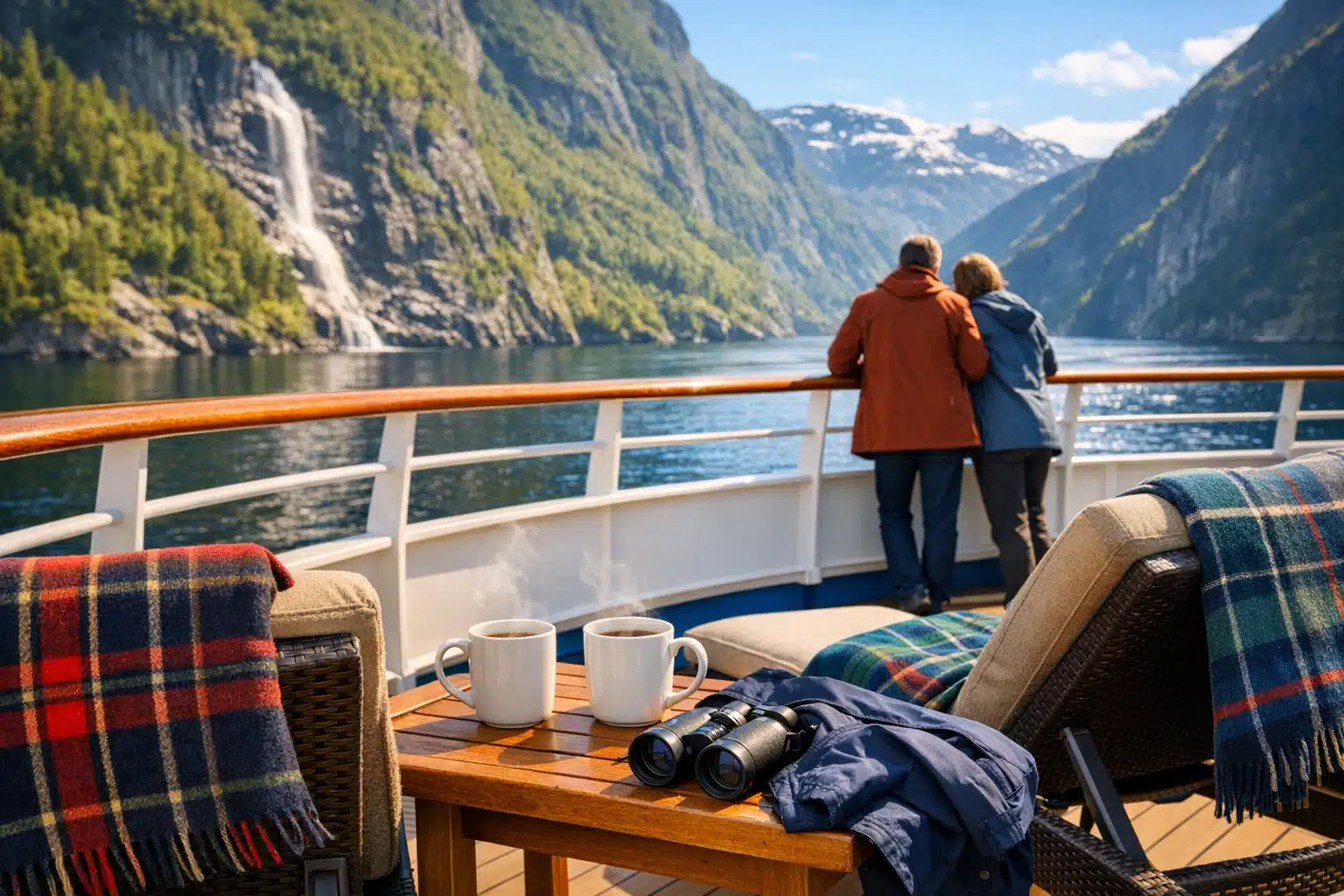
- Day 5: Scenic cruising through a fjord or coastal passage — Not every highlight requires a gangway. Scenic cruising days are often among the most memorable because everyone slows down and looks outward. Bring a warm layer and spend time on deck.
- Day 6: Ålesund or another coastal town — Ålesund is known for its Art Nouveau architecture and panoramic viewpoints. It offers a different mood from fjord villages: more urban, more walkable, and excellent for photography.
- Day 7: Haugesund, Kristiansand, or a comparable port — These smaller calls often balance history, waterfront strolling, and manageable excursion times. They can be less overwhelming than larger cities.
- Day 8: Final sea day — This is when people revisit favourite venues, do some quiet packing, and realise the cruise is nearly over.
- Day 9: Return to Newcastle — Disembarkation is efficient when luggage is organised the night before and onward transport is planned sensibly.
The key point is that an 8-night route usually offers contrast rather than constant intensity. You get one or two urban-style ports, one or two scenic heavyweights, and a couple of sea days that stop the trip from becoming a blur. Some sailings substitute Bergen, Flam, Eidfjord, or Invergordon, but the same principle applies: you are buying a sequence of changing moods. One morning begins with soft cloud over dark water, another with a colourful harbour, another with the ship gliding past waterfalls before breakfast. That variety is why these itineraries remain so popular.
Cabins, Costs, and What to Compare Before You Book
Price is usually the deciding factor when people first browse cruises, but the headline fare rarely tells the whole story. A better approach is to compare total trip value. On an 8-night cruise from Newcastle, the base fare commonly covers your cabin, main dining, buffet access, entertainment, and transport between ports. Beyond that, spending can vary dramatically. Two passengers on the same ship can come home with very different final bills depending on cabin category, drinks, excursions, Wi-Fi use, and specialty dining choices.
The main budget areas to think about are these:
- Cabin type — Inside cabins are usually the lowest-cost option and can be excellent for travellers who treat the room mainly as a place to sleep. Oceanview cabins add natural light, which many people appreciate on northern routes. Balcony cabins cost more, but on scenic Norwegian itineraries the extra space can feel especially worthwhile if you enjoy quiet mornings outdoors.
- Drinks packages — These can offer convenience, but they are not always economical for every passenger. Light drinkers often spend less by paying as they go.
- Shore excursions — Ship tours are easy and lower-risk for timing, yet they are usually more expensive than independent plans. In Norway, excursion costs can rise quickly because transport and labour are relatively expensive.
- Gratuities and service charges — Some fares include them; some do not. This should be checked before booking rather than discovered later.
- Travel insurance — Essential, not optional. It should include cruise cover and medical protection suitable for your itinerary.
- Parking or rail costs to the port — These are smaller than flight expenses for many travellers, but they still belong in the total budget.
When comparing cabins, think beyond the brochure image. On a fjords cruise, a balcony can provide privacy and excellent views during scenic sail-ins, but only if you plan to use it. If you prefer public decks, lounges, and observation areas, the price jump may not deliver enough value. An oceanview cabin is often the middle path: more expensive than inside accommodation, but much less costly than a balcony on many departures.
Timing matters too. Shoulder season sailings, often in spring or early autumn, may offer lower fares than peak summer dates, though weather can be cooler and daylight shorter. Families usually face higher prices during school breaks. First-time cruisers should also examine what is included in promotional packages, because a seemingly pricier fare that bundles drinks, tips, or Wi-Fi can sometimes outperform a cheaper basic deal.
The smartest question is not “What is the cheapest cabin?” but “Which option fits the way I actually travel?” That shift in thinking prevents overpaying for features you will ignore and underbuying when one upgrade would have materially improved the trip.
Packing, Weather, Embarkation, and Shore Planning Tips That Make the Trip Easier
Northern cruises reward practical planning. If you imagine an 8-night sailing from Newcastle as a holiday of warm afternoons and effortless packing, Norway may correct that idea quickly. Weather can shift within a single day, particularly in fjord regions where conditions are shaped by elevation, wind, and moving cloud. Summer sailings often bring cool mornings, mild afternoons, and occasional rain rather than consistent heat. That means the single best packing principle is layering.
A useful packing list usually includes:
- A waterproof jacket with a hood
- Light fleece or jumper layers
- Comfortable walking shoes with decent grip
- A day bag for shore visits
- Any motion-sickness remedy you trust
- Binoculars for scenic cruising
- A plug adapter if required by the ship
- Printed or downloaded travel documents
Do not underestimate the value of being warm enough on deck. Some of the best moments on a fjords cruise happen outdoors during sail-ins, sail-aways, and scenic passages. Passengers who pack only for indoor comfort often retreat just when the landscape becomes extraordinary. A hat and thin gloves can feel surprisingly useful even in late spring or early summer.
Embarkation day runs more smoothly when you treat it as a process rather than a race. Arrive in the port area with time to spare, keep medication and valuables in your hand luggage, and avoid packing anything essential into checked bags. If you are travelling to Newcastle by rail, consider staying nearby the night before if your journey is long or involves multiple connections. That extra hotel night can protect the entire cruise from one delayed train.
Shore planning is where many travellers either save money or create unnecessary stress. Cruise-line excursions offer security because the ship will wait for officially booked tours delayed by the operator. Independent exploration, however, can be cheaper and more flexible, especially in walkable ports such as Stavanger or Ålesund. A sensible middle path is to reserve ship excursions for remote or transport-heavy stops and go independently where the town centre is close to the pier.
Also pay attention to port time, not just port name. A destination may sound generous on paper, but an arrival at 8:00 and all-aboard at 16:30 can shorten what is realistically possible. Build in a return buffer if you go ashore alone. Ships do not wait for late passengers who arranged their own tours. Finally, check mobile data costs before departure. Norway is outside standard arrangements on some plans, and unexpected roaming charges can be an annoying souvenir.
Final Thoughts for First-Time Cruisers, Couples, and Regional Travellers
If you live within reach of Newcastle or can get there without major hassle, an 8-night cruise is one of the more practical ways to experience the Norwegian coast. It removes one of the most tiring parts of modern travel, namely the airport chain of check-in, security, boarding gates, and baggage reclaim, and replaces it with a simpler departure day. That alone makes the trip attractive for travellers who want the holiday to feel calm from the start rather than only after they arrive.
For first-time cruisers, this length works well because it shows the full range of the experience without becoming overwhelming. You get enough sea time to understand life onboard, enough port calls to see whether organised excursions or independent wandering suit you better, and enough evenings to discover your own pace. Some passengers fill every hour with talks, shows, and shore tours. Others settle into a quieter rhythm of coffee on deck, a slow breakfast, a walk in port, and an early night after a long view of the coastline. Both approaches fit this itinerary.
Couples often enjoy these cruises because the setting encourages shared downtime without constant planning. Retired travellers may appreciate the manageable logistics and the lack of flight complications. Families can also find good value, especially when the ship offers flexible dining and indoor entertainment for variable weather days. The cruise is less suited to travellers seeking guaranteed beach weather or late-night city breaks in every port. Its strengths are scenery, ease, and variety rather than nonstop urban energy.
Before booking, it helps to ask a short set of practical questions:
- Am I choosing this route for scenery, convenience, or both?
- Would I actually use a balcony enough to justify the extra cost?
- Do I prefer the safety of ship excursions or the freedom of independent touring?
- Am I prepared for cool, changeable weather?
- Have I checked all extras, including gratuities, drinks, insurance, and transport to the terminal?
The best way to think about an 8-night cruise from Newcastle is as a well-paced northern escape. It is long enough to create that pleasant separation from everyday life, yet short enough to remain accessible to busy travellers. The ship becomes both transport and hotel, while the itinerary serves up a sequence of harbour towns, sea crossings, and fjord views that feel dramatically different from a standard city break. If that combination sounds appealing, this type of cruise is not merely convenient. It is often one of the smartest and most rewarding ways to travel from the northeast.